
Fields in Noble County Property Tax Records
No single file holds every Noble County property tax record. The Assessor posts valuation and property-card data through Beacon, while the Auditor tracks deductions and transfers. The Treasurer carries the bill, payment, and delinquency side.
| Record field | Meaning | Responsible source |
|---|---|---|
| Assessed value | Value carried for assessment under the property's methodology. | Assessor / Beacon |
| Deductions | Approved homestead, mortgage, senior, veteran, disability, energy, or heritage-barn benefit. | Auditor |
| Tax Bill ID | Eleven-digit bill key displayed XXX-XXXXXX-XX and beginning with zero. | Auditor / Treasurer layer |
| Bill and payment status | Installments, amount due, payment, and delinquency. | Treasurer |
| State PIN | Eighteen-digit parcel key used across map and assessment records. | GIS / Assessor |
An assessment is not a payment. A tax bill is not a sale price. Noble County values residential and commercial property from market data, while agricultural, utility, solar, and other special-use classes follow different state-driven methods. Keep the property class and assessment year attached to any comparison.
Build a compact evidence bundle for each review: situs address, owner display, State PIN, Tax Bill ID, legal description, property class, assessed value, deductions, bill year, installments, and posted payment status. Pull every field from a single cycle. That keeps an old assessment from riding on a current payment. Splits and combinations change identifiers. Retain both keys. Ask the Auditor which effective year governs the new roll.
Match Noble County Tax Parcels in Beacon
Start a Noble County parcel search at Beacon. The layer choice matters. Assessor, Auditor, Treasurer, and Surveyor systems group and refresh land differently, and the county documents the search inputs that work best.
| Beacon input | Search tactic | Tax-record use |
|---|---|---|
| Land Ownership Name | Last name alone or first and last; comma unnecessary. | Confirm the parcel before opening tax information. |
| Address | Try variants because rural and multiple-residence addresses can be difficult. | Save the parcel and bill identifiers. |
| Parcel ID | Use all 18 State PIN digits; punctuation is optional. | Match the parcel used by the Treasurer. |
| Tax Bill ID | Use all 11 digits and preserve the leading zero. | Select the tax-bill layer. |
| Layer selector | Choose the office dataset suited to the question. | Do not read a Surveyor tract as a Treasurer bill. |
The county's Beacon troubleshooting page explains recent-transfer and split delays.
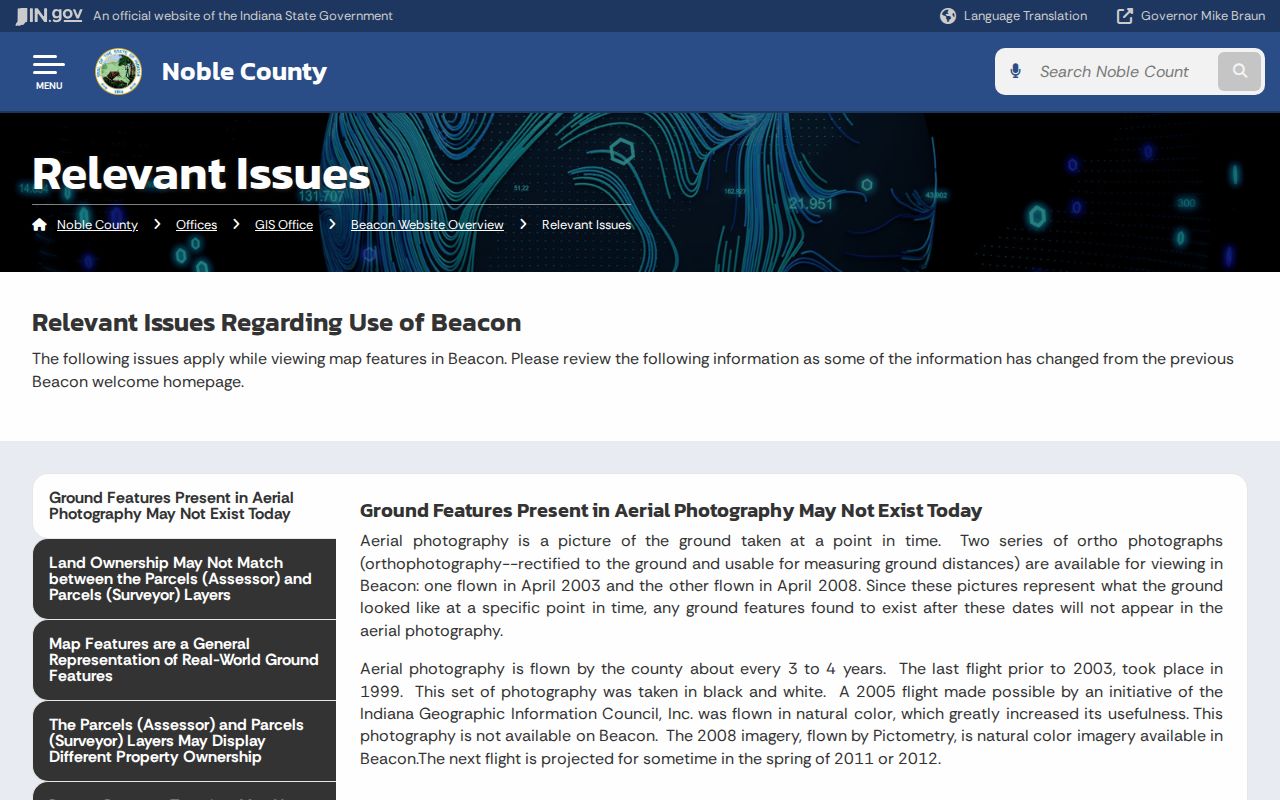
The county's posted search instructions explain the inputs. Switching layers or identifiers recovers parcels that address searches miss. Note: Preserve the leading zero in a Tax Bill ID, because spreadsheet conversion can silently break an otherwise correct lookup.
Look Up a Noble County Tax Bill
Start with the parcel, not a name. The Treasurer accepts online, phone, mail, drop-box, and in-person payments. Its phone system asks for a 13- or 18-digit parcel number. That number begins with 57. Online routes include MunicipalPay and LowTaxInfo, as the office links them.
- Use Beacon to identify the State PIN and Tax Bill ID for the correct tract.
- Open the Treasurer's bill or payment route and select the intended tax year.
- Compare the bill with the Assessor value and Auditor deductions for that parcel and year.
- Read delinquency or sale material as a dated status; verify later payment, redemption, and any deed separately.
- Assessed value
- The value placed on the assessment roll under the applicable property methodology.
- Levy
- The amount raised by a taxing unit and reflected in calculation of parcel tax.
- Homestead deduction
- A benefit for a qualifying primary residence administered by the Auditor.
- Tax lien
- A claim arising from unpaid tax; delinquency is not itself a completed sale.
Bills go out each April. Installments fall due May 10 and November 10, shifting to the next business day when needed. A bill that never arrives still creates the obligation and any penalties.
When the online status and a receipt disagree, write down the payment date, confirmation or check information, parcel identifier, and tax year before contacting the Treasurer. The office record controls. A payment posted to the wrong year or parcel cannot be fixed by editing an address in a private spreadsheet. Recent purchases need a closer look. Compare the closing documents with the county bill. Ask whether the title company paid, prorated, or held funds for the installment. The Treasurer's posted status remains the public verification point.
Use Every Noble County Tax Access Channel
The official Treasurer page posts the current due dates, payment methods, office contact, and tax-sale notices.
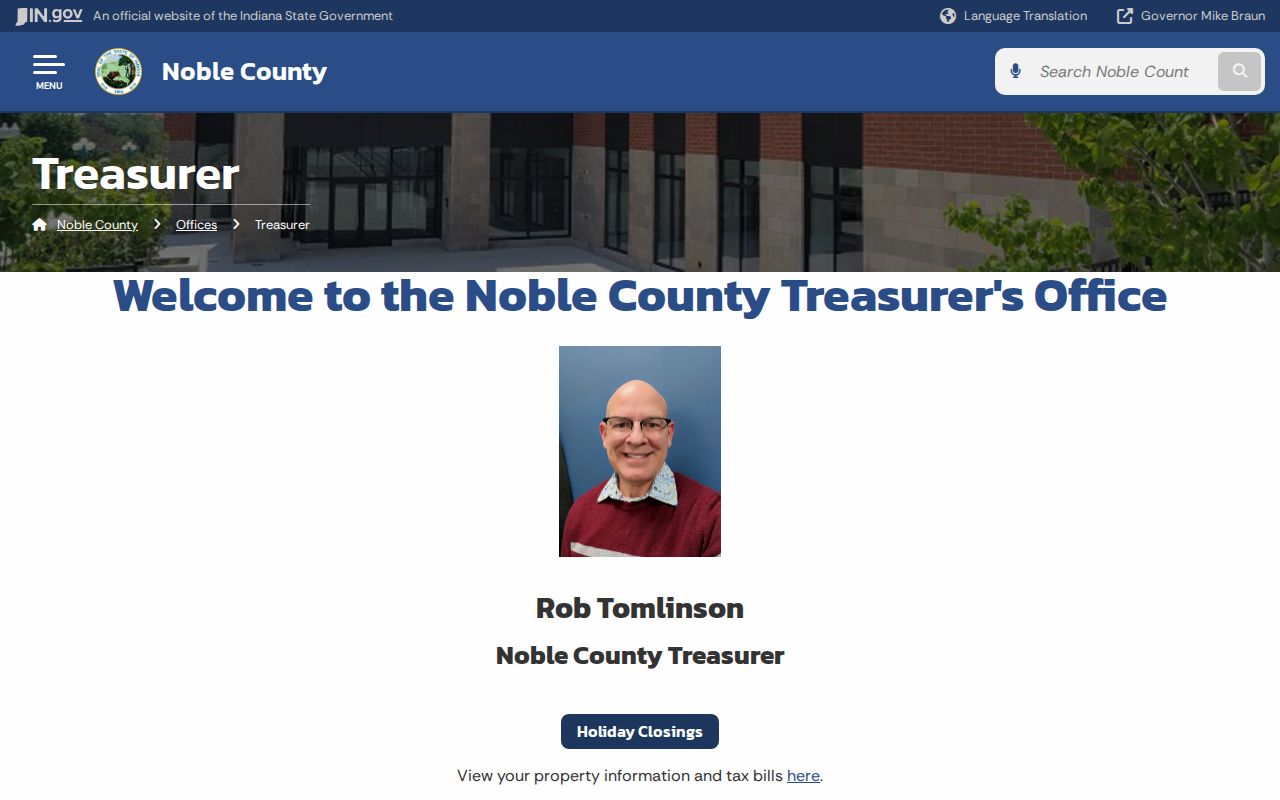
Finish every lookup on the live county instructions. Payment services and accepted instruments can change independently of a printed bill.
| Channel | Bring or enter | Practical limit |
|---|---|---|
| Online | Parcel or bill ID and selected year | Confirm convenience fees and posted status. |
| Phone | 13- or 18-digit parcel number beginning 57 | Follow the current vendor prompts. |
| Clearly identified payment and bill reference | Never send cash. | |
| Drop box | Clearly identified payment | Never leave cash. |
| In person | Parcel details and an accepted payment method | Visit the Annex during posted hours. |
Deductions Behind Noble County Taxable Amounts
The Noble County Auditor lists the deduction menu: Homestead, Mortgage, Over-65, Veterans, Blind/Disabled, Geothermal/Solar, Heritage Barn, and certain fertilizer or pesticide storage-improvement benefits. Record each deduction name and filing year. A deduction is not a deed change and proves nothing about title.
Homestead allows one per married couple. The residence must qualify as primary. Ownership, a recorded contract, or a vested-trust interest can establish it. Posted mortgage rules include Indiana residency. An active balance of at least $3,000 is also required. Blind and disabled applications require proof and may be filed in person or by mail by the deadline. Energy and heritage-barn deductions run on their own year-end and early-January timing.
Ask the Auditor three things. Confirm the benefit stays active for the assessment year, learn which evidence is required, and check whether a recent transfer created a new filing need. Never infer eligibility from an older bill. Deduction timing sits apart from payment timing and appeals. Record the application date, supporting proof, effective assessment year, and any Auditor confirmation. Special benefits attach to specific components. Note the exact solar array, geothermal system, or heritage barn behind a claim rather than describing a deduction as a change in parcel ownership or the Assessor's physical record.
Thresholds move. The posted over-65 and blind/disabled rules can change. Trust the live Auditor page for each filing year, not a threshold copied from a past bill.
Recent Noble County Sales and Split Bills
Noble County keeps its Recorder, Assessor, Auditor, GIS, and Treasurer databases on separate schedules. So the tax roll lags sometimes. A buyer whose bill still shows the old owner of record should search under that former name. Ask the title company. Request the split sheet from the Auditor or Assessor. One more wrinkle exists. Assessor groupings do not always line up with Surveyor tracts in Noble County.
After a deed transfer, lot split, subdivision, or combination, work the records in order. First confirm the recorded conveyance in the deed records. Then get the Auditor's transfer or split status. Finally match the bill identifier on the current tax bill. A stale owner name never cancels the tax obligation. Also remember this. One combined tax bill may not describe each legal parcel on its own.
Note: A tax-roll owner label can lag a recorded deed, so use the parcel number. Confirm transfer status with the proper office.
Follow Noble County's 2026 Tax-Sale Trail
The Treasurer's current notice schedules a Noble County tax sale for October 5, 2026. It starts at 10:00 a.m. in the Annex Multipurpose Room, 109 N York Street. The notice also points to the SRI Tax Sale System. It describes payment-instrument changes starting June 1. These are scheduled process facts. They are not proof that any particular parcel actually sold.
Trace a parcel one stage at a time. The stages are delinquent tax bill, published notice, offered property, sale result, redemption, and any later deed. The Recorder holds any completed conveyance in the deed records. A parcel that was paid off or redeemed should never be called a completed tax sale. Its earlier listing alone does not prove a sale.
The official SRI landing page supplies the linked system Noble County references.
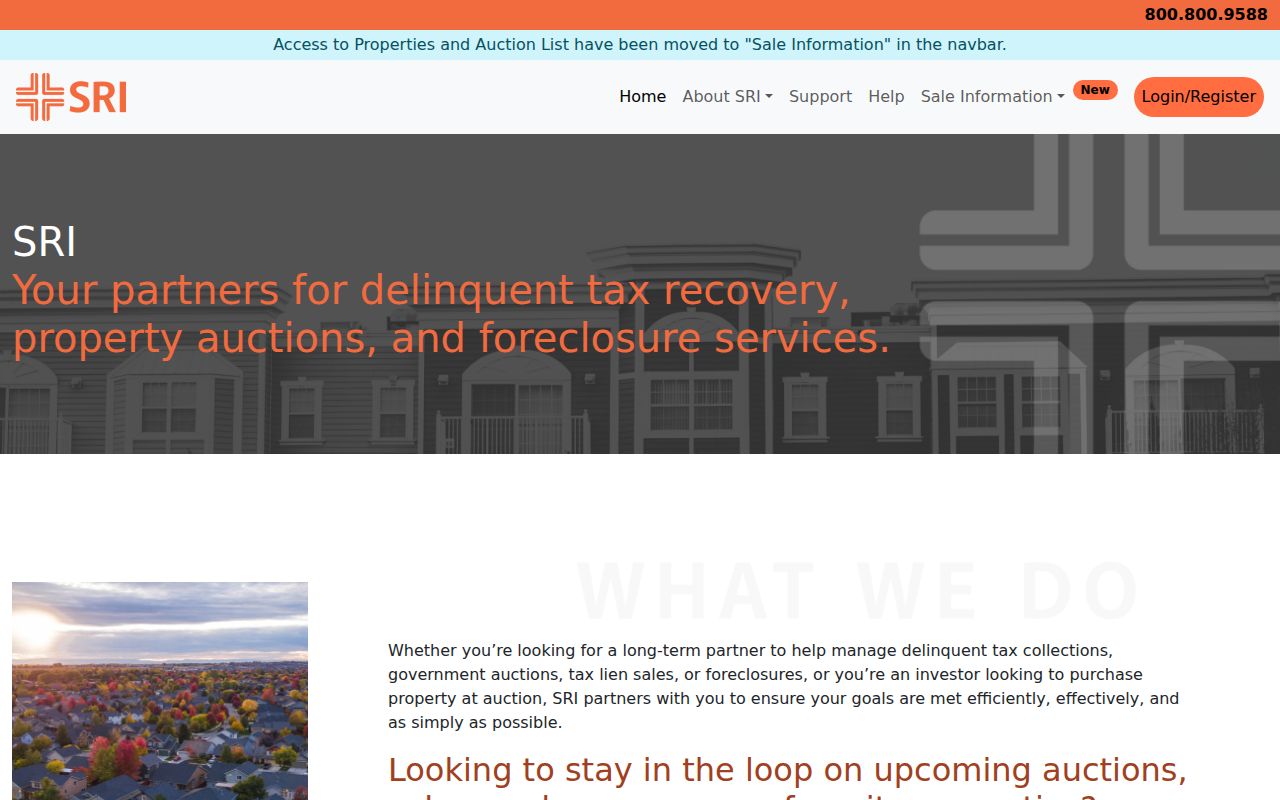
The portal supports sale research well. Still, a parcel's true legal status depends on Noble County payment records and any resulting recorded deed.
Contest a Noble County Assessment
Form 130 is the appeal route. The Noble County Assessor posts Property Tax Assessment Board of Appeals dates. The 2026 calendar lists February 13, February 27, and March 27. Those meeting dates are not a universal filing deadline, though. Confirm your notice-specific deadline and the current board calendar with the Assessor before you file.
Build the appeal from records. Gather the property card and assessment notice. Include the legal parcel identifier, photographs, measurements, and genuinely comparable properties of the same class. Residential and commercial or industrial appeals lean on market data. Agricultural and special-use property follows other methodologies. Comparisons that ignore class will weaken your case.
Protect the appeal window. Noble County posts Form 130 and board dates, but the controlling deadline depends on the notice and cycle; verify it directly with the Assessor.
If a record is not published, an Indiana Access to Public Records Act request under IC 5-14-3 can help. Identify the parcel, assessment year, record sought, preferred format, and fee threshold. APRA does not require a custom comparison or a new list.